World-level engineering. Built from scratch.
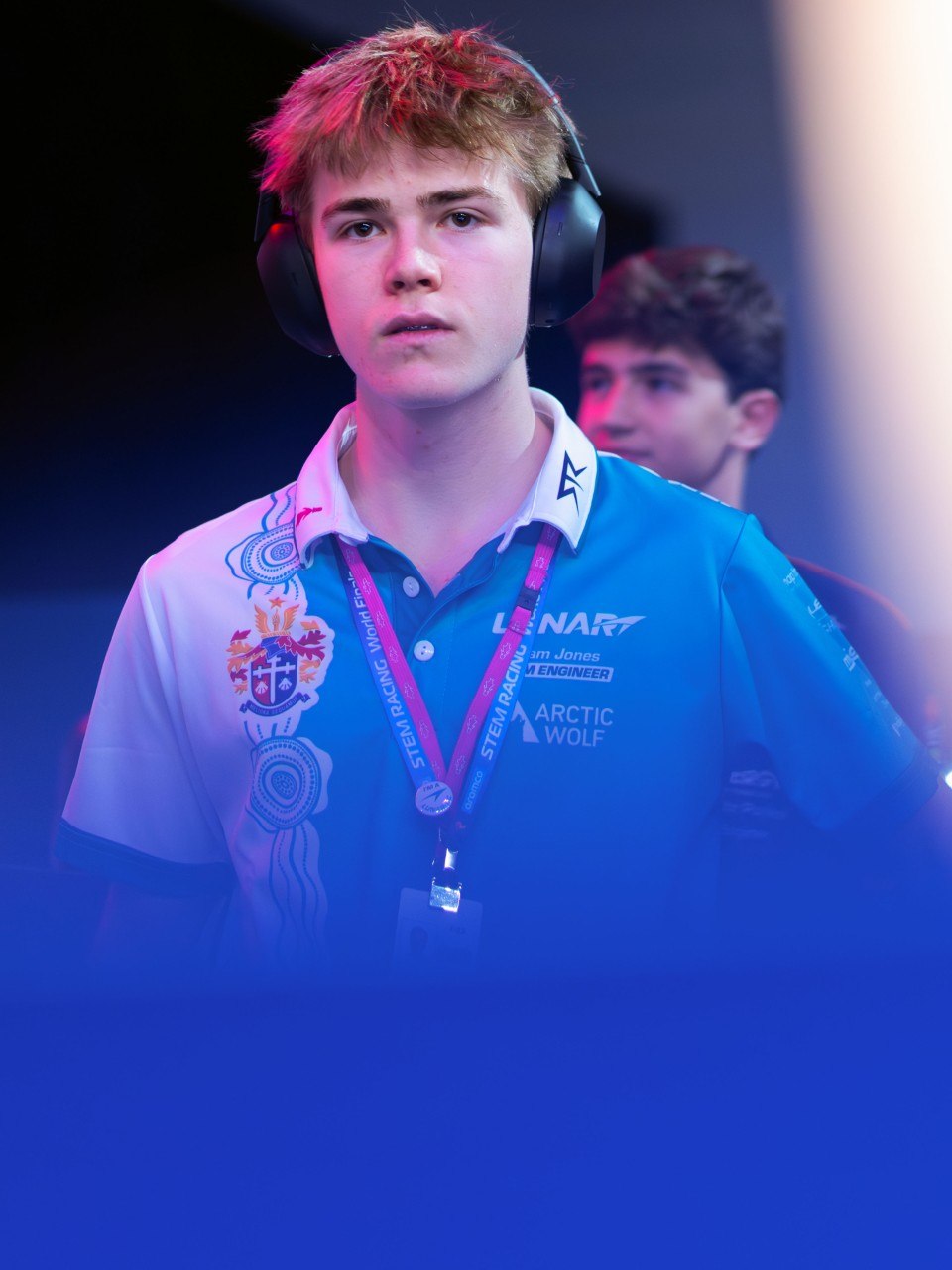
STEM Racing is the largest STEM competition in the world with ~1.8 million students partaking in the 2025 season – teams of 3–6 students design, manufacture, and race miniature CO₂-powered cars against competitors from over 40 countries. They also must build reputable brands, run marketing campaigns, and run industry-level project management. The margins are measured in milliseconds and micrometres. Under Team Lunar, Liam served as Manufacturing Engineer for nearly 4 years – responsible for the physical precision that decides whether a car wins or loses.
1st
World Champions 2025
STEM Racing World Finals · Singapore
3rd
World 2024
STEM Racing World Finals · Saudi Arabia
1st
Australian National Champions 2025
Record-setting performance
STEM Racing took the way I already thought about building and put it under real pressure. It was no longer about just making things that interested me – it evolved into a situation where every decision had to survive manufacturing, testing, judging, documentation, and race-day performance through strategic thinking and planning.
My role in Team Lunar was manufacturing engineer for circa four years – bringing our design engineer team's creations into reality, which had to perform while at such a small scale. That involved working through CNC machining, additive manufacturing, tolerancing, material behaviour, surface finishes, fitment, assembly, and the constant optimisation and balance between speed, weight, strength, and reliability. Small errors mattered. A fraction of a millimetre could easily change how a part fitted. A poor finish could affect drag, consistency, and quality.
The competition rewarded complete systems, not isolated ideas. The car, the engineering portfolio, the testing process, the manufacturing merit, and the team's ability to explain every decision all had to connect. That forced me to become very deliberate about how I worked. I had to justify decisions, measure outcomes, and improve the process instead of just hoping the final result would be lucky.
That experience shaped the standard I still hold today in everything I build.
Manufacturing expertise
Balsa & Foam Construction
Technical Portfolio & Documentation
Performance-under-Pressure Engineering
STEM Racing taught me that performance is rarely accidental. It comes from structure, testing, iteration, and knowing which small details create the biggest difference.
That lesson did not stay inside racing. Over time, I started seeing the same pattern in businesses I had seen online or in person. Some had great people, strong services, and real customer value – but their systems behind the scenes were inconsistent. Follow-ups were missed. Reviews were left to chance. Customer experience depended too much on memory, timing, or manual effort.
The Review Gap came from that realisation: the same systems-thinking used to improve a race car can be used to improve how a service business operates, communicates, and grows.